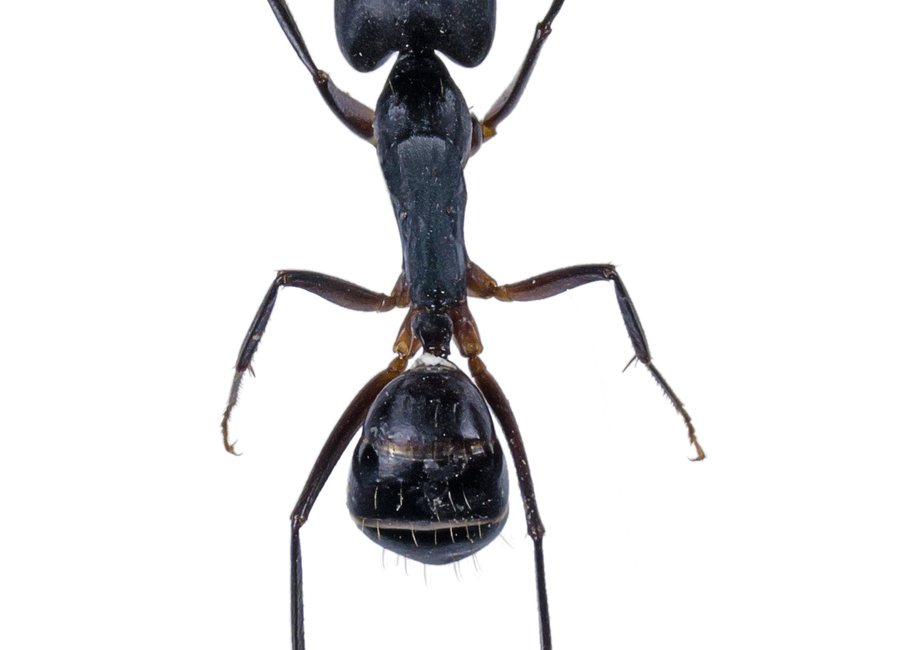
Ant control in Covington, KY covers two very different problems. Odorous house ants, the tiny dark ants that smell faintly of coconut when crushed, are the ones streaming across the counter after a spring rain; pavement ants push up through cracks and old basement slabs. Then there are carpenter ants, the big black ants that do not eat wood but excavate it to nest, and Covington's century-old framing, damp basements, porch columns, and water-damaged sills and window frames are exactly the soft, moist wood they look for. Because what you see is a fraction of a colony that lives somewhere else, spraying the trail rarely fixes anything. An experienced local exterminator baits the colony and finds the nest.
Odorous house ants and pavement ants
These are the small ants that appear on counters, along baseboards, and around sinks, especially after rain pushes them out of saturated soil and old foundation cracks. They nest outdoors under stone, mulch, pavers, and against the foundation, and forage indoors for water and sugars. Repellent sprays scatter them and can split the colony into more nests.
Baiting works because foragers carry the bait back and share it with the colony. Add a non-repellent exterior perimeter, seal the entry points around windows, sills, and utility lines, and the pressure drops.
Carpenter ants and damp wood
Carpenter ants are the real structural concern in an old Covington house. They nest in wood that has been softened by moisture, so they turn up in damp basement joists, porch columns and steps, window and door frames under a leak, and around gutters that have been overflowing for years. Look for coarse sawdust-like frass below a small hole, faint rustling in a wall, or big black ants indoors in winter, which usually means a nest inside.
Treating carpenter ants means locating the nest, treating it directly, and then fixing the moisture that made the wood attractive. Without the moisture fix, they come back.